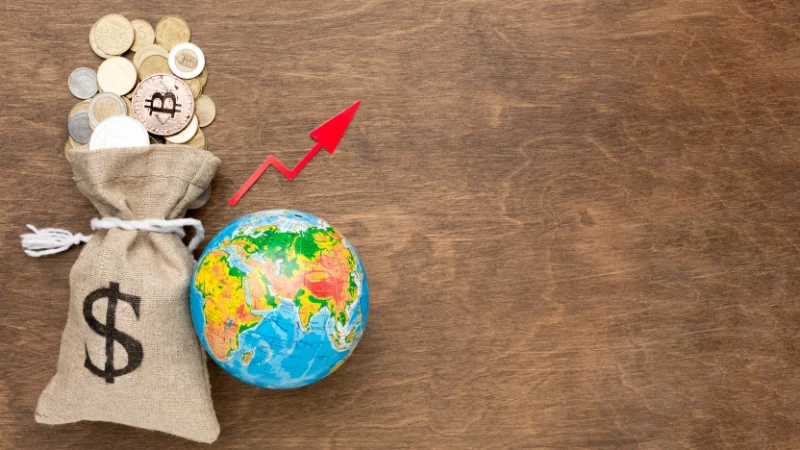
Money plays a central role in modern life. It influences choices, shapes opportunities, and drives change across societies. Many people view it as a tool for personal success. Others see it as a means of power and inequality. However, money can also serve as a bridge toward fairness and progress. When used responsibly, money helps improve education, healthcare, the environment, and community welfare. This article explores how we can channel money into positive directions that benefit humanity. It also examines how to balance financial growth with ethical responsibility. By the end, you will see how money can better this world when handled wisely and consciously.
The Power of Money in Society
Money holds undeniable influence in shaping economies and cultures. Governments rely on it to create infrastructure, defense, and social programs. Businesses depend on it for innovation and expansion. Families use it to survive, save, and build better futures. Without money, collaboration at large scale becomes nearly impossible. Money is not inherently good or evil. Its effect depends on how people choose to use it. When directed with intention, it supports growth, justice, and opportunity. Money can empower marginalized groups and reduce poverty gaps. It can also encourage sustainable progress for future generations. People must realize that money better this world when aligned with compassion and purpose.
Money and Education
Education remains one of the greatest equalizers. Yet, millions still lack access to quality schools and resources. Money plays a critical role in fixing this imbalance. Funding builds schools, hires teachers, and provides modern learning materials. Scholarships offer underprivileged students a chance to rise above limitations. Governments that invest in education see stronger economies and healthier societies. Private donors also play important roles through philanthropy. They establish programs that create lifelong learning opportunities. Digital education platforms grow faster with proper financial support. Education builds future leaders and innovators who solve global challenges. Ultimately, money better this world when invested in knowledge and equal learning access.
Money and Healthcare
Healthcare represents another crucial area where money influences lives. Countries with strong healthcare systems often rely on smart financial investments. Money funds hospitals, research, and medical training. It ensures the availability of life-saving drugs and treatments. Adequate healthcare reduces mortality rates and increases life expectancy. Communities thrive when health needs are prioritized. Charitable donations also bring medical care to rural or underserved regions. Modern technology, supported by funding, creates breakthroughs in medicine. Vaccination programs save millions of lives globally. The COVID-19 pandemic showed how essential funding is for rapid response. Money better this world by improving health and protecting lives everywhere.
Money and Environment
The environment suffers under reckless industrial growth. Deforestation, pollution, and climate change threaten humanity’s future. Money can reverse this damage when invested responsibly. Governments use taxes to fund green energy projects. Businesses adopt eco-friendly operations when consumers demand sustainability. Nonprofits rely on donations to plant trees and clean oceans. Research requires financing to develop renewable energy and sustainable farming. Eco-tourism generates revenue while protecting biodiversity. Green investments encourage industries to adopt responsible practices. People can also contribute by funding community sustainability programs. With proper allocation, money promotes cleaner air, water, and soil. Clearly, money better this world when directed toward protecting the planet.
Money and Social Equality
Social inequality continues to challenge global progress. Disparities exist in wages, housing, education, and healthcare. Money can reduce these inequalities if distributed with fairness. Government welfare programs help families overcome poverty cycles. Microfinance loans empower small entrepreneurs in developing regions. Charitable giving supports women, minorities, and marginalized communities. Wealth redistribution through fair taxation strengthens public services. Philanthropy creates scholarships, shelters, and rehabilitation programs. Equal opportunity fuels creativity and innovation across industries. Businesses that promote diversity often outperform competitors. Investment in community projects fosters social stability and growth. Without financial support, equality remains an empty promise. Money better this world when shared with justice in mind.
Money and Technology
Technology shapes modern civilization. Every innovation depends on funding and investment. Money supports engineers, developers, and researchers in creating new tools. It funds labs, startups, and global tech companies. Without money, advancements like smartphones, satellites, and artificial intelligence would not exist. Financial backing drives innovation in renewable energy and medical devices. It helps scale solutions for global connectivity and access. Crowdfunding platforms also allow communities to fund life-changing projects. Developing countries benefit from technology grants and investments. Ethical technology use ensures inclusion rather than exploitation. When invested wisely, technology solves critical human problems. Money better this world by powering innovations that improve life everywhere.
Money and Community Development
Strong communities depend on financial stability and resources. Money supports affordable housing, safe public spaces, and clean infrastructure. Local businesses flourish with microloans and grants. Community centers rely on funding for cultural and educational programs. Sports and arts initiatives create unity and belonging. Public transportation improves when governments allocate funds effectively. Nonprofits strengthen communities through financial donations and volunteer work. Disaster relief relies on fast mobilization of money. Economic empowerment reduces crime and increases cooperation. Local leaders can transform entire neighborhoods with small investments. Communities flourish when money serves collective growth rather than exploitation. Money better this world through vibrant, inclusive community development.
Challenges of Money Misuse
Money also carries risks when misused. Corruption undermines trust in governments and institutions. Greed fuels exploitation, monopolies, and inequality. Excessive consumerism damages mental health and the environment. Poor financial planning causes debt crises for individuals and nations. Wars often escalate due to resource greed and profit motives. Misuse of money creates divisions rather than unity. However, awareness can change this cycle. Transparency, accountability, and ethical practices ensure better outcomes. Financial literacy empowers individuals to manage their finances wisely. Regulations safeguard societies from harmful economic manipulation. Misuse is dangerous, but mindful use transforms lives. Ultimately, money can better this world only when used with integrity and fairness.
FAQs
1. How can money improve education globally?
Money improves education by funding schools, training teachers, and offering scholarships to disadvantaged students.
2. Can money solve healthcare challenges?
Yes, money funds hospitals, medical research, and treatments, improving global healthcare access and outcomes.
3. Does money affect environmental protection?
Investing in renewable energy, conservation projects, and sustainable industries supports the planet, protecting it for future generations.
4. How does money reduce inequality?
Money reduces inequality through fair taxation, welfare programs, and investments in marginalized communities.
5. Is technology dependent on money?
Yes, every technology innovation depends on research funding, investments, and financial backing.
6. Can money truly make the world better?
Yes, when used responsibly, money betters this world by promoting equality, health, education, and environmental sustainability.